Crop fertilization
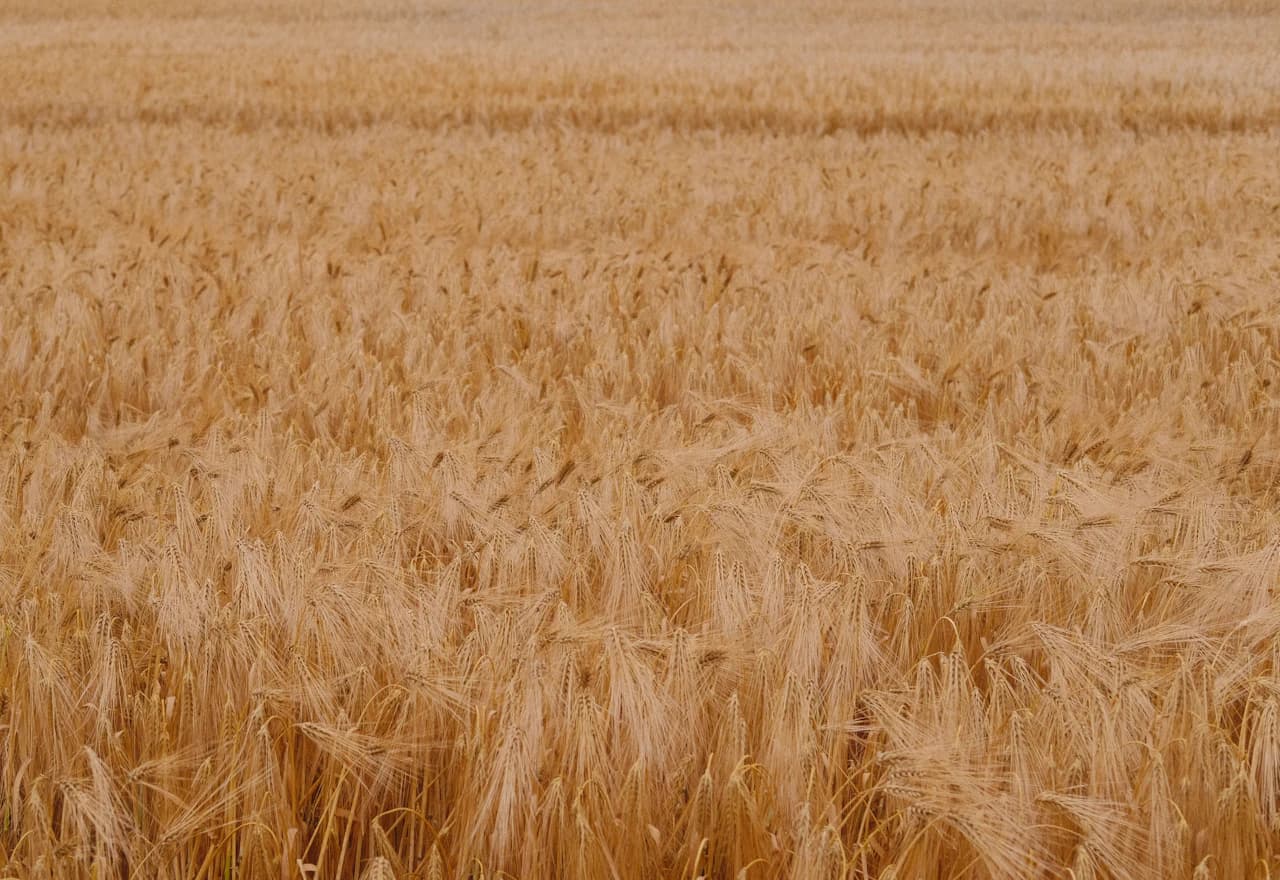
Broadcast, incorporated or side-dress application for cereals, oilseeds, maize, rice, cotton and vegetables. Hydrolyses in soil to ammonium and nitrate; nitrogen uptake begins within days under warm, moist conditions.

Atso Tek supplies urea (CO(NH₂)₂) with 46% nitrogen in three commercial grades: Prilled and Granular for soil application and crop nutrition, and Low-Biuret for foliar spray programmes. Bulk vessel and bagged shipments under all major Incoterms.

Urea (CO(NH₂)₂) is a white crystalline compound containing 46% nitrogen — the highest nitrogen content of any solid fertilizer. Produced from ammonia and CO₂, it dissolves readily in water and hydrolyses in soil to release ammonium and nitrate available to crops. Atso Tek sources from vetted producers across the Black Sea, Middle East and North Africa, and consolidates to your port under agreed Incoterms.
Prilled and Granular cover standard soil application; Low-Biuret is the choice for foliar spray programmes on sensitive crops. Final specification locked into the contract.
Small spherical granules produced in prilling towers. Standard agricultural grade for direct soil application, blended NPK fertilizers, and bulk distribution. Cost-effective and widely traded. Biuret ≤ 1.0% per ISO 18642.
Larger, harder granules produced by drum granulation. Better resistance to caking and moisture uptake than prills. Preferred for mechanical spreaders, long-distance storage, and markets that demand lower dust. Biuret ≤ 1.0%.
Engineered for foliar spray programmes. Standard-grade biuret (0.5–1.0%) is phytotoxic when applied as a leaf spray on sensitive crops: it accumulates in leaf tissue and causes tip-burn and chlorosis. Low-Biuret grade ≤ 0.25% eliminates this risk.
Typical values shown. Limit values are the contract boundaries. Testing per ISO 18642 (chemistry), ISO 3310-1 (particle size), and Karl Fischer or oven method (moisture).
| Parameter | Prilled | Granular | Low-Biuret | Unit |
|---|---|---|---|---|
| Total nitrogen (N) | ≥ 46.0 | ≥ 46.0 | ≥ 46.0 | % min. |
| Biuret | ≤ 1.0 | ≤ 1.0 | ≤ 0.25 | % max. |
| Moisture | ≤ 0.5 | ≤ 0.5 | ≤ 0.5 | % max. |
| Free ammonia (NH₃) | ≤ 0.05 | ≤ 0.05 | ≤ 0.05 | % max. |
| Water-insoluble matter | ≤ 0.1 | ≤ 0.1 | ≤ 0.1 | % max. |
| Particle size | 1–2.8 mm | 2–5 mm | 2–4 mm | 90% range |
| Color | White | White | White | |
| Form | Prilled | Granular | Granular | |
| Standard | ISO 18642 | ISO 18642 | ISO 18642 |
Note: Source: ISO 18642:2016 (fertilizer-grade urea requirements). Values reflect typical lot performance; contract limits are documented per shipment. Pre-shipment independent analysis (SGS, Intertek, Bureau Veritas) available on request.
Urea is the most widely traded solid nitrogen fertilizer globally. It also feeds into chemical synthesis, resin production, and selective catalytic reduction (AdBlue / DEF) systems.

Broadcast, incorporated or side-dress application for cereals, oilseeds, maize, rice, cotton and vegetables. Hydrolyses in soil to ammonium and nitrate; nitrogen uptake begins within days under warm, moist conditions.


Dissolved in water and applied as a canopy spray for fast mid-season nitrogen correction. Low-Biuret grade required to prevent phytotoxicity on citrus, stone fruit, pineapple, beans and other sensitive crops.

High-purity urea dissolved at 32.5% in deionized water forms Diesel Exhaust Fluid (DEF / AdBlue) injected into SCR catalytic converters to reduce NOx emissions from diesel engines by up to 90%.

Urea-formaldehyde (UF) resins are the dominant adhesive for plywood, MDF and particleboard. Urea is also used in melamine production, pharmaceutical intermediates and textile finishing.
Every urea shipment from Atso Tek ships with the standard export documentation package. Pre-shipment independent inspection can be arranged on request.
Fertilizer-grade urea — general requirements and test methods
Total nitrogen determination
Particle size by mechanical sieving
Moisture content determination
Biuret content analysis
Prilled urea has small spherical granules (1–2.8 mm) produced in a prilling tower — it is the most widely traded form and cost-effective for bulk blending. Granular urea (2–5 mm) is harder, less prone to caking, and preferred for mechanical spreaders and long-distance storage. Both grades carry the same 46% N specification and ≤ 1.0% biuret limit per ISO 18642.
Send your grade (Prilled, Granular or Low-Biuret), monthly volume, destination port and preferred Incoterm. You'll get a written quote with FOB, CIF or CFR pricing, lead time and packaging within one business day.